
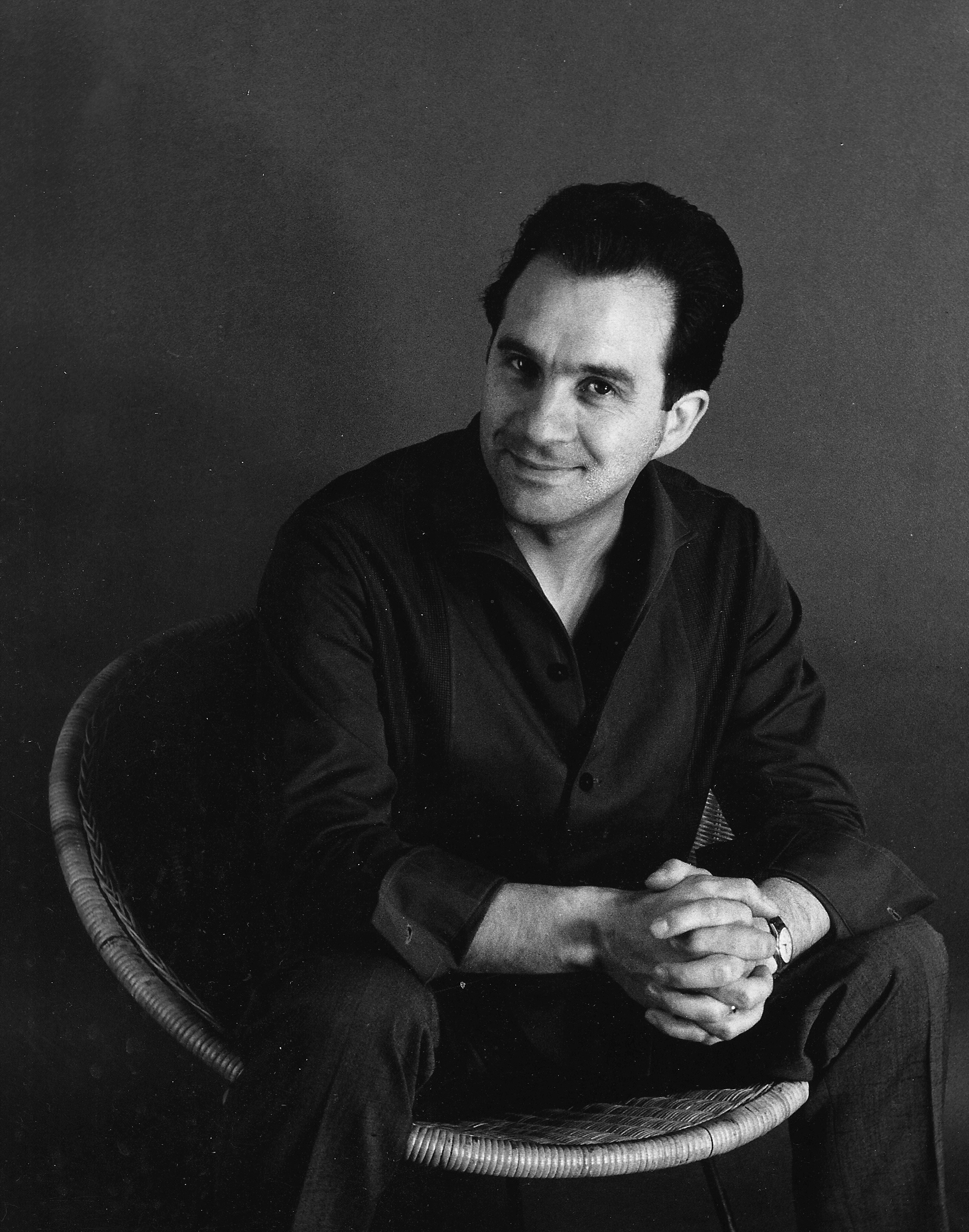
prepared especially for this blog by the distinguished writer and broadcaster Jon Tolansky
As a directionless school-leaver who had been an academic disaster, I was immensely fortunate that my father, the most deeply generous and loving man I ever knew, was tough with me on this one and only occasion in the summer of 1966. I had set my heart on going to study music at Trinity College of Music in London (now Trinity Laban Conservatoire of Music and Dance) as I had heard that a distinguished celebrity who had inspired me as I watched his television programmes was going to take up a post there as Conductor of the Orchestra. But I wouldn’t stand a chance of being admitted unless, for the first time in my life, I worked very hard and achieved a sufficiently acceptable standard of piano playing and also general theoretical musical ability to pass the audition. My father’s great generosity meant that he would pay for an intensive crash course – provided I was to show genuine signs of application. Otherwise……… His condition saved my life – and the following year I was at Trinity College of Music, studying timpani and percussion with the outstanding Lewis Pocock of the Royal Philharmonic Orchestra, and fulfilling my dream of playing in the Trinity College Symphony Orchestra under Bernard Keeffe: the artist who had galvanised me and countless other music lovers in his groundbreaking television series “Workshop”, in which he compellingly introduced, discussed and conducted music with a full symphony orchestra in the studio. For three years I received unprecedented education in my life playing under his direction (which he continued at Trinity until 1988) and, in my final year, participating in conducting master-classes that he inaugurated there. Little could I know then that decades later I was to have the privilege of working again with this inspirational and exceptionally erudite artist when I became a documentary producer and he contributed to my features with the kind of colour, dynamism and polymath scholarship that appealed so strongly to so many television viewers and also radio listeners for such a long period of time.
“The first movement of Beethoven’s Third Symphony is explored with the help of the composer’s notebooks, which provide a unique and fascinating insight into the mind of a revolutionary genius.
Introduced and conducted by Bernard Keeffe who has orchestrated some of Beethoven’s early sketches. With the London Philharmonic Orchestra, leader Rodney Friend”.
The singer, conductor and broadcaster Bernard Keeffe (born, 1st April 1925 in Woolwich; died, 27th November 2022 in King’s College Hospital) began his musical life in Hiroshima in 1945, not long after the city had been ravaged by the detonation of the “Little Boy” atomic bomb. He had been sent there as an Intelligence agent, as he had been a code-breaker in the war-time Japanese section at Bletchley Park. In Japan he met the pianist Marcel Lorber and sang with him on tour. On his return to England he began his professional career as a freelance actor and singer, and in 1951 he was a member of the extra chorus in the Covent Garden Opera when Sir Thomas Beecham conducted Wagner’s Die Meistersinger von Nürnberg – an experience that made a profound effect on him, notably in respect of Beecham’s conducting. A few years later he was singing in a film – the Royal Albert Hall sequence in Alfred Hitchcock’s The Man Who Knew Too Much. By the time that it was released he had married the soprano and actress Denise Walker, in 1954. The following year he joined the music staff of the BBC, starting a long relationship that included a position as Head of Opera, during which time he was responsible for commissioning Britten’s revised two act version of Billy Budd, which aired in November 1960. For many years he was both a presenter and a producer for the BBC Third Programme (later BBC Radio 3), and for BBC World Service music programmes. In 1961 he was appointed the Head of Planning at what was then the Covent Garden Opera Company, which post he relinquished before long in order to pursue his conducting career, which had begun in the late 1950s and now developed notably: after a two year period as Assistant Conductor at the BBC Scottish Orchestra he was conducting most of the London orchestras. His television fame began early in 1965 – he had already appeared on screen, but it was when BBC Two launched its ‘Music on 2’ slot that his “Workshop” series was the first of its kind in the United Kingdom to attract a large and regular audience. In fact there had not been anything like this on television in Britain before, when a conductor introduced and discussed music in depth and illustrated everything by actually conducting it – and did so with a winning combination of high expertise and relaxed informality. I so well remember the first programme. It was called “Eroica” – and this was the Radio Times entry:
It was received with these reviews: “One of the best music programmes I ever saw” (The Guardian);
“A riveting display of television…. the kind of nerve-tingling success that tops up all one’s faith in television”.” (Daily Mail)
That programme was a pilot and it was so successful that a long-ensuing series followed. They were wide-ranging, including programmes on Berlioz, Mahler, the latest contemporary music, and Elgar, among others. “Elgar and the Orchestra” was hailed by the celebrated film director Ken Russell as a “marvel”, and the entire series was so popular that the Eroica feature was repeated twice – once later in 1965 and then again in 1967. Leonard Bernstein, pioneer of televised music discussion, was so impressed that he sent Bernard Keeffe a telegram of congratulation and said that he would be adopting some of his methods in his own world-renowned programmes.
In 1976 Bernard Keeffe was at the helm for a programme that would be timely to see again in the upcoming year if the BBC might have it in its Archive and might wish to reshow it, as it featured the art of a great giant composer whose death will be the subject of widespread centenary commemoration in 2024. Puccini was one of his very favourite of all composers, and in “The Lively Arts” slot he introduced, discussed and conducted extracts from his operas in his feature that he called “Giacomo Puccini, Master Craftsman”.
As well as devising, presenting and conducting television features about music, Bernard Keeffe made three programmes for BBC Two’s history and archaeology series “Chronicle”, including notably “The Coming of the Black Ships”, which related the opening up of Japan to the West in 1853. He also turned his maverick talents to acting on television when, together with Dudley Moore and Antony Hopkins he “aided and abetted” Peter Ustinov in his unscripted impromptu send-up music magazine programme “Ustinov Ad Lib” which aired on BBC 1 on a, in those musical days, daring occasion in April 1966. On a more and customary serious and scholarly note, from 1955 he sat on the board of the Anglo-Austrian Music Society, of which he eventually became the Chair. In 2015, he was invited to become its President, and the following year the Republic of Austria invested him with the Austrian Cross of Honour for Science and Art.
For many decades, Bernard Keeffe strove to bring the compositions of his long time friend Berthold Goldschmidt to the attention of musical authorities that had neglected his works ever since he had been forced as a Jewish subject to leave Nazi Germany in 1935. As a result of his initiative in 1983 to mount a run-through of scenes from Goldschmidt’s opera Der gewaltige Hahnrei at Trinity College of Music, the musicologist David Drew took up the composer’s cause to the extent that his music was signed for publication by Boosey & Hawkes. This was a landmark for Goldschmidt and the start of an Indian summer of international recognition at last, reaching its climax when the Decca producer and scholar Michael Haas arranged a series of recordings of his works.
As an epitaph to Bernard Keeffe, extraordinary artist and friend who is now deeply missed, his letter to The Independent newspaper published on the 26th of January 1998 epitomises the idealistic cultural values he so inspiringly and influentially brought to so many people with his brilliant gifts:
“Sir: In his review of the BBC2 programme about Gustav Mahler (“Great composers? You bet!”, 23 January), Robert Maycock suggests that two decades ago such a programme would have been unthinkable.
Three decades ago I wrote, presented and conducted the Philharmonia Orchestra in a BBC2 examination of Mahler’s music under the title “The Vision of Gustav Mahler”. It was one of the magnificent Workshop series which was such an imaginative feature of the first years of BBC2 under the guidance of Humphrey Burton.
Such programmes were not rarities; before the surrender to ratings it was quite usual for there to be two or three music programmes each week – operas, masterclasses, documentaries, recitals, films, interviews. The recent series, admirable though they were, were oases in a desert compared with the glorious landscape that BBC2 once presented.”
 robccowan
My thanks to Jon Tolansky for writing this lovely tribute, and to you for printing it! It evokes great memories for those like me who were first captivated by classical music as teenagers in the sixties. The article brings to mind other iconic moments from those days, especially Ken Russell’s Elgar and a programme* featuring Leonard Bernstein rehearsing the LSO in Sbostakovich’s 5th Symphony. We owe so much to gifted musicians and communicators like Bernard Keeffe and Humphrey Burton and, from a slightly later era, Andre Previn, who was derided by some as slick and shallow but who was an equally great musician and charismatic presenter!
*actually there might have been two programmes, I seem to recall that the first one only featured the first two movements, and it was only after a public outcry that the BBC broadcast the rehearsal of the last two.
LikeLike
Thank you so much Tony. I shall relate your appreciative post to Jon.
LikeLike