It’s maybe worth taking note of various great Ukrainian musicians and quoting some of the equally great Russians they collaborated with, or studied: Sergei Prokofiev (Sviatoslav Richter); David Oistrakh (Kyrill Kondrashin; Rudolf Barshai): Nathan Milstein (Horowitz, Glazunov); Leonid Kogan (Rostropovich; Gilels); Valentina Lisitsa (due to record Rachmaninov’s complete piano works. She has already recorded the complete Tchaikovsky solo piano pieces); Shura Cherkassky (Yuri Temirkanov) and so forth. I doubt that any of these musicians, when collaborating, would have given the least thought to their place of birth, or the origins of their musical collaborators. The music and only the music is what bound them. In that they were as close as it was possible to get.
I myself had Ukrainian grandparents on my mother’s side. But there’s a catch. The very word Ukrainian didn’t enter my life prior to the fall of Communism. Until then, I’d always (proudly) considered myself part-Russian (the Odesa-born violinist David Oistrakh was a member of my maternal grandmother’s family). That’s certainly how I thought when I visited Moscow and St. Petersburg 30 or so years ago. Now I find myself erecting mental/emotional barriers where previously there weren’t any – all because of one sick man. I have to stop myself doing that.
By and large the Russian people have nothing to do with this. They are pawns in a ghastly, murderous game. The Ukrainians are behaving impeccably, led by a true hero. There was a heart-breaking shot on TV this morning of an 8/9-years old kid stomping along the road crying his eyes out. It broke my heart. I could imagine my granddaughter in the same position (God forbid), reacting in much the same way. Even Valery Gergiev, foolish as he appears to have been, made some wonderful music at home and abroad – Bruckner, Mahler, Wagner, Mussorgsky, Tchaikovsky, Prokofiev, Rachmaninov and so much more. Are we now to turn our backs on his considerable musical achievements because of his silence re Putin? Has it occurred to anyone that he knows things that we don’t, that he can’t openly disclose (maybe regarding Putin’s sate of health, for example)? He can easily see how much support Zelenskyy is receiving and is possibly grateful. The air will have to clear and all the gun/bomb-smoke with it before we can make accurate judgements about who says or thinks what, who is silent, and who isn’t. Gergiev could still be found wanting big-time, that’s for sure … but wait and see. In the meantime, let’s be nourished by all the amazing Ukrainian/Russian musicians.
Please join me Rob Cowan with Presto Classical’s Paul Thomas and Supraphon’s classical music chief producer Matouš Vlčinský discussing a truly remarkable new 15-cd set devoted to that art of a major Czech conductor from the 20th century. The music you’ll hear is very varied and often thrilling. Here’s the link:
Like all music of importance Grażyna Bacewicz’s piano works (Ondine ODE 1399-2, c£12.75) sound as if they were excavated after being hidden for years rather fashioned on the spot. In other words, it’s as if deep down we somehow already know them, just that we need to be reminded of what they actually sound like. Take the first of the Ten Concert Etudes (1956-7), like a Bartók Study (ie the first piece from Bartók’s Op.18 set) altered with time, motor-driven but never inflexible. “I possess this little unseen engine,” writes Bacewicz, “and thanks to it I accomplish a task in ten minutes which takes others an hour or more”. You suss that refreshing ability to ‘cut the cr**p’ by the number of pieces that end either very emphatically (Study No. 6) or with a sense of unsullied resolution (Study No. 4). And yet there’s mystery to spare, in No. 8 which glances back to Bacewicz’s compatriots Szymanowski, even Chopin (and by harmonic association the Russian Skryabin).
Invention is legion, such and we hear in No. 9 where although the music rushes ahead, a force of nature keeps pulling it back again (at least initially) while the last of these studies suggests, in its utter tumultuousness, distant parallels with the last of Chopin’s first set (ie, Op. 10), the ‘Revolutionary’, a fervent maelstrom that troubles the memory like a gnawing earworm. Then there are the Two Etudes on Double Notes (1955), again with the odd Chopinesque cadence (in No. 1) whereas No. 2 carries with it a hint of puckishness typical of Prokofiev or Shostakovich in playful mood (as they so often are in their piano works). But what makes this disc indispensable, aside from the dazzling and musically persuasive playing of Peter Jablonski, are the two piano sonatas, the First from 1949, the Second from 1953, the two slow movements especially, the first with gentle chimes breaking through the solemnity, the second, an intensely elegiac Largowith hints of a fugue towards its close. As to the Second’s Toccata-finale, if you know Arthur Rubinstein’s dazzling rapid-fire showpiece encore ‘O polichinelo’ (‘Punch’), from Book 1 of Villa-Lobos’s A prole do bebê (1918),you’ll have some idea what to expect. As I said at the head of this notice, it’s as if Bacewicz has unearthed hidden treasures for our delectation. We in turn should keep abreast of her rich pickings and believe me there are plenty to choose from. Excellent annotations and sound by the way.
Writing reviews is pretty pointless if you have no idea who you’re writing for. In my case I try to imagine near neighbours whose musical tastes correspond roughly with my own, who I regularly call on with news of this or that new release or reissue, sampling tracks at the ready. Today the prompt for my enthusiasm is a celebration of an early music pioneer who died in 2012, Warner Classics’ New Gustav Leonhardt Edition (9029646771, 35 cds, c£85). OK, I know the price-tag is pretty hefty, but in terms of musical nourishment the payback justifies the cost many times over. For starters try Leonhardt’s 1965 recording of Bach’s Goldberg Variations (originally out on Teldec’s ‘Das Alte Werk’ series, as are most of the recordings included here). Legendary producer Wolf Erichson saw to it that the harpsichord sound was warm yet present, while Leonhardt glides seamlessly from one variation to the next, never hurrying, forgoing repeats and making sure that rhythm and line are in happy accord. True, there are snappier accounts of the Goldbergs around, ones that make their points more forcefully, but none that commune from a more musical standpoint. Leonhardt is the ‘quiet man’ among Baroque players, but his performances always leave their mark. Then there’s Bach’s Capriccio on the Departure of his Beloved Brother, ‘Departure’ in this context meaning not a cause for mourning, but a journey. It’s the only piece of instrumental programme music in Bach’s output, with section titles such as ‘Friends gather and try to dissuade him from departing’, ‘They picture the dangers which may befall him’ and to close ‘Fugue in Imitation of the Post horn’. Leonhardt quaintly, and quietly, announces each section (in German) before he performs it.
There are numerous Bach miniatures including the sacred song Gib dich zufrieden und sei stille, superbly sung by Agnes Giebel, one of the finest sopranos of the day. And among the few cantatas featured is the magical funeral ode ‘Actus Tragicus’ or Gottes Zeit ist die allerbeste Zeit (God’s time is the very best time) which opens to a Sinfonia where two recorders interweave, as if comforting each other. Nothing else in Bach’s output quite compares and Leonhardt’s performance catches the music’s inner glow and near-minimalist allure. Other Bach masterpieces include violin sonatas with harpsichord, English Suites and Partitas and concertos for one or more harpsichords, all performed with unostentatious vitality.
Beyond Bach there is music by his sons, most notably various symphonies and concertos by the highly original Carl Philipp Emanuel, including music that truly crosses the divide between the baroque and early classical eras, the Concerto for harpsichord and fortepiano, a work infused with a genuine sense of drama – the sort that ‘Bach the father’ conjured with his great D minor solo Clavier Concerto.
And what else? Plenty that if you don’t already have a taste for repertoire of this era may well convert you. I’m speaking of Biber, Handel, Rameau, Froberger, Purcell, Kuhnau, English consort and keyboard music, and consort music generally. I’m not for a moment suggesting that Leonhardt is ‘better’ than his various successors in the period instrument field, but what makes him unique is the sense of confidentiality in his playing even when spirited (as it is in a striking group of Domenico Scarlatti sonatas). A sense of rightness is what I’m talking about. The keyboardist, conductor and scholar John Butt has said that “…there’s absolutely no doubting the enormous influence [Leonhardt] held over multiple generations of music making in the Baroque field.” And if that influence is to make its full impact we need to listen closely and devotedly. A magnificent set.
The conceptual pairing of Mozart piano sonatas and silent films might at first sight seem bizarre but listen to Glenn Gould whizz through the finale of K279 (a journey that lasts a mere 1:54) and Keystone Cops most readily spring to mind. Here the man who brazenly opined that Mozart died too late rather than too early sends panic among the ranks for a performance that while dextrous in the extreme avoids just about every musical point worth making. Gould’s controversial set of the solo Sonatas and Fantasias is newly reissued on Sony Classical (19439917892, c£17.25).
Switching to the Soviet/Austrian pianist Elisabeth Leonskaja who recorded the sonatas for Warner Classics in 2021 (Warner Classics 9029645782, c£33.00) there’s the unsettling Fantasia in C minor K475 where at 5:19 forceful chords in the bass set to a rattling accompaniment suggest a distressed screen damsel with smudged mascara pleading for her life. Later on, from around 10:32, there are vivid premonitions of Beethoven’s Appassionata. With most pianists you half expect a fiery Beethovenian four-chord onslaught to follow, but not with Leonskaja, whose sense of musical inevitability coincides precisely with Mozart’s own.
While chiding Gould for wilful extremes there are some aspects of his playing that prove illuminating, the central andante from the A minor Sonata K310 for example where at the movement’s core he cues a haughty accompanying staccato, disdainfully superior in mood but undeniably impressive. Still, it’s Leonskaja who offers you ‘cantabile con espressione’, as marked, playing graced by minutely employed punctuation, much as the first movement of K333 in B flat where you can sense every intake of breath, hear every tiny inflection or bend in the line. If it weren’t a contradiction in terms I’d say ‘less is more’ taken to extremes. Above all Leonskaja’s tone is so beautiful, which in turn aids the effect of her sensitive phrasing. Her timing is impeccable and unless I’ve missed something along the way she offers us all of Mozart’s marked repeats …. and with playing of this quality, they’re without exception welcome.
OK I know we already have the likes of Mitsuko Uchida (Decca), Lili Kraus (Sony Classical), Roland Brautigam (BIS),Peter Donohoe (Somm) and Jean-Efflam Bavouzet (Chandos) in this repertoire but even as viewed – and heard – from such interpretative peaks as theirs Leonskaja remains in a class of her own. If you can speak of Mozart’s ‘Yin and Yang’ she has them fully sussed for the cycle’s duration.
The name Franz Lehár is best remembered nowadays for his operettas, for a fund of wonderful melodies and for what’s perhaps the most politically incorrect of all song lyrics (‘Girls were made to love and kiss’). He’s also a composer whose lovingly gemütlich style calls on a very singular manner of music-making, one that’s constantly aglow. Lehár recordings of note stretch way back to the shellac era when the composer himself set down 78s of key arias with his greatest singing interpreter, the tenor Richard Tauber – whose father was Jewish hence his banishment from Nazi-ruled territories – while subsequently there appeared significant sets of the operettas featuring the likes of Fritz Wunderlich, Elisabeth Schwarzkopf, Nicolai Gedda, Giuseppe di Stefano and countless others. But this new Hänssler Profil collection ‘Dein ist mein ganzes Herz’ (‘You are my heart’s delight’, 1 cd + 1 dvd, PH22004, c£24.00), where Manfred Honeck conducts the Vienna Symphony Orchestra, is distinguished by some of the finest Lehár conducting since Rudolf Kempe and the composer’s own. Someone ought to appoint Honeck to conduct a Vienna New Year’s Day Concert. He’d likely be the best we’ve had since Carlos Kleiber.
But before commenting further on the music, I’d like to draw your attention to the DVD which is in effect a fictitious interview, undertaken in German with subtitles, where a canny journalist (subtly portrayed by the Austrian actress Aglaia Szyszkowitz) is welcomed by the 75-years-old composer (vividly played by Wolfgang Hübsch) who although frail after an illness is alert to, and ultimately slayed by, the questions she poses him (for The Daily Telegraph we’re told). His answers by the way are compiled from reliable sources and are therefore authentic.
“How did you survive the War?” is a telling opener, or one of them. “We don’t want to talk about the War” insists Lehár emphatically, though he is drawn to confess that The Merry Widow was the favourite operetta of Hitler and his henchmen. “But was that my fault?” protests Lehár’ “…. I owed nothing to the Nazis.” Thereafter the mood lightens and the conversation switches to musical issues …. until 1938 approaches and with it the Anschluss. “Of course, we were long gone by then …” confesses Elsa. “You? …. long gone? …. why?” replies Lehár. “You know Herz is a Jewish name?” she explains. And so Lehár is after all coerced into facing the one subject he wanted to avoid, the war and its attendant tragedies. “Why didn’t you leave?” asks Herz. “I didn’t have to,” answers Lehár candidly before unfolding one tragedy after another. In the end, he regretfully draws a halt to the interview and asks Herz to come back the next day. The unwanted shadow cast, he’s utterly spent. All this intensity is offset by frequent footage taken from the accompanying concert featuring soprano Camilla Nylund, and the tenors Piotr Beczala and Michael Schade, mostly in some of Lehár’s ‘greatest hits’. It’s a pleasure to watch.
How warming to see Honeck’s generous cues for music that he must often have played when he was a violinist with the Vienna Philharmonic and State Opera Orchestras. Gold and Silver opens the programme, initially capricious and lively, then luscious as the first waltz enters, truly piano (as marked, the second time around) then jumping to a jaunty forte for the second section. The way Honeck and his players move from section to section, like a master pianist teasing his way around a delicious Strauss waltz transcription, is the stuff of real artistry. Likewise, the equally familiar Merry Widow Waltz while the vocal items taken from the major operettas are given ardent performances, mostly by Nylund and Beczala. Schade treats us to the rarely heard ‘tone poem for tenor and large orchestra’ Fieber (‘Fever’), with its use of the Rákóczi March and the Russian Song of the Planes, setting words by Erwin Weill who was interned in Theresienstadt concentration camp in 1941 then sent to Riga where he was murdered. So you see, fine as the music is, that wretched shadow just won’t go away.
There’s a priceless moment worth recalling in Tony Hancock’s classic radio show ‘The Poetry Society’, which wryly focuses the ‘fifties beatnik-style avant garde and the numerous well-meaning pseuds who followed it. “Are you musical?” asks Bill Kerr, addressing a typically OTT Fenella Fielding (who plays the Goth character ‘Greta’). “I can only tolerate Bartók and Weber,” smoulders Fielding, cocking a snook at the so-called musical bourgeoisie, or so she thinks. But hold on, why nineteenth-century Weber, who although highly original is hardly a beacon for the modern avant garde? Surely, she meant Webern, that twentieth-century Austrian master of finely tooled atonal miniatures who, when the Russian Army neared Vienna towards the end of the Second World War, fled to Mittersill near Salzburg and was accidentally shot and killed there by a soldier in the U.S. occupation forces. He was just 61 years old.
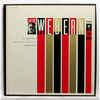
As it happens ‘The Poetry Society’ was first aired in December 1959, the very month when ‘The Complete Works of Anton Webern’ was first released in the UK via Philips and the publishers Alfred A. Kalmus and that has recently re-appeared, newly remastered, on Sony Classical (19439911902, 4 cds, c£17.25). I say ‘complete’ though strictly speaking that’s not the case, as there are various early works that had yet to surface and would only make it onto disc, in a ‘complete’ context, years later principally when Pierre Boulez twice revisited the same territory (first for Sony, then for Deutsche Grammophon).
Luckily my local music library at The Boroughs, Hendon, bought a copy of the set for stock so that this ever-curious teenager was able to borrow the ‘complete’ edition (the charm of that all-encompassing term) and hunker down in my tiny bedroom to audition Webern’s rarefied world. I’ll never forget my initial sampling of the first track, the Passacaglia for large orchestra, just a few quiet pizzicato chords to start with, then a passionate 10-minute onslaught, very Mahlerian as I would later discover (once Mahler 9 had entered my musical orbit). The playing was amazingly intense but then Robert Craft’s superb studio orchestra consisted of numerous players who had, or would, appear on soundtracks, jazz and ballad albums and experimental orchestral collections. So it was hardly surprising that although the music seemed to hail from outer space, the glowing style of Craft’s driven performance somehow made it seem familiar. And that was just for openers. Next came one of Webern’s exquisite, gnomic vocal miniatures, one of his many settings of Stefan George, Flee in light barques, sounding as if it was recorded in a local scout hut, the small vocal ensemble vibrant and intimately communicative. Then Marni Nixon arrived, all fragility and expressive intensity, again with George’s words, ‘this is a song for you alone, of childish fancies and fervent tears …’, Nixon herself, the seductive film soundtrack singing voice of Audrey Hepburn, Deborah Kerr, Natalie Wood, Jeanne Crain and Marilyn Monroe, to name but a few, sounding heartbreakingly childlike. I could imagine her clad in white under a tree at night, her pale powdery face and ghoulish upturned smile more ghostly than anything I’d ever heard in classical song …. yet, still, so beautiful.
Countless other songs beckoned as well as instrumental pieces such as the Five Pieces for String Quartet Op. 5, where mystery lay side-by-side with violence (nos. 3 and 4), the line-up including violinist Dorothy Wade who made records alongside Sarah Vaughan and Peter Nero and cellist Emmet Sergeant, whose discography finds her in collaboration with the likes of Sarah Vaughan, the Mothers of Invention, Sam Cooke, Ella Fitzgerald, Frank Zappa, Jerry Goldsmith, and Henry Mancini. I say this because it helps explain why although infinitely strange Craft’s Webern allowed for a certain strain for familiarity that seemed to sugar the pill, at least while sugar was required.
The three mature orchestral works are miracles of concise articulation and colouration. Op. 6 has at its centre an ominous funeral march with so many ‘dead thumps’ (as they sound in Craft’s airless acoustic, the bass drum sitting beneath moaning brass) while the barbed Symphony seems more thrown off than performed (compare Karajan and the BPO on DG, infinitely more subtle, likewise Doráti [LSO] in the Op.10 pieces). OK I’ll grant you that Boulez and the Berlin Phil reach out for more overwhelming crescendos in Op. 6, but there’s something about Craft’s ‘black-and-white’ (mono) melodrama that kills off any sense of sensuousness. That too has its impact.
There are many more songs, some sung by Grace-Lynne Martin, an early protégé of Stravinsky, recording his works for both Columbia and Epic records (as did Nixon), two superb cantatas, pieces for violin and cello, a string trio and an early Piano Quintet, and so forth. But perhaps the ultimate ‘give-away’ track is the penultimate one, Webern’s patiently attentive orchestration of the ‘Ricercar’ from The Musical Offering, one of the truly great Bach orchestrations. That in a sense brings us back to base, the prime mover for a composer whose credo was to use as few notes as possible, though always meaningfully, the musical equivalent of Emily Dickinson, ‘telling the truth but telling it slant’ as she would have put it. Or maybe the Austrian-British philosopher Ludwig Wittgenstein is a better point of reference, Wittgenstein who ended his first major work, Tractatus logico-philosophicus, with the words ‘Whereof one cannot speak, thereof one must be silent’. In Webern’s case we could adjust that closing aphorism to read ‘Whereof one cannot speak, thereof one must search among the realms of music’. And Craft’s team, for all their minor flaws, certainly make you realise that much.
I’d always thought that the deafening silence that greets the frantic close of Beethoven’s 9th Symphony as cued in Berlin in 1942 by Wilhelm Furtwängler (Archipel ARPCD0270) was mute fear inspired by the presence of the Nazi Propaganda Minister Dr. Goebbels. All other Furtwängler performances of the piece that I’d heard were tailed by immediate volleys of applause but on that night a good few second elapsed before anyone dare to ‘cast the first clap.’ Frightening is what I’d call it, but apparently not unique. The most celebrated of Furtwängler’s 9ths is the one he conducted for the post-war re-opening of the Bayreuth Festival on July 29th1951, oft-reissued, most recently on a fine sounding transfer included in Warner Classics’ 55-cd ‘The Complete Wilhelm Furtwängler on Record’, not quite what it says on the box but I shan’t go into that now.
Apparently Furtwängler was furious when during the drive home after the concert EMI’s Walter Legge seemed lukewarm about the performance, so much so that Furtwängler insisted he stop the car so that he could take a walk, cool off and gather his angry thoughts. This reaction on Legge’s part has always seemed to me ludicrous. To describe the performance as magnificent is an understatement, which isn’t to say that it will suit all moods or indeed all tastes. It’s more a happening than a performance, which opens among descending mists, confronts thunderclaps for the first movement’s stormy centre, dances demonically in the scherzo, stretches the sublime slow movement to near-on 20 minutes then for the finale, after the Biblical-sounding low string recitatives at the beginning and a long, suspenseful pause, ushers in the ‘Ode to Joy’ as if from the far distance. The theme itself builds with excitable abandon, wrapped in expressive counterpoint, while Furtwängler has his chorus distend chords where other choirs would run out of breath. The percussive march episode (Hans Hopf, tenor) forges impatiently forwards and the fugue that follows argues a furious response. Has this movement ever sounded so compelling on disc? Or more inevitable? Not in my experience.
But in a sense the best is yet to come. At the close of the work Furtwängler takes Beethoven at his word with a reckless prestissimo, hurtles towards a precipice, then rockets high into the ether. Whatever lies below is so far down as to be invisible. At least that’s the impression given by this latest transfer which unlike its Warners rival honours a very long silence that recalls that 1942 Berlin performance. So you see … it wasn’t Goebbels and his mob who ‘inspired’ a respectful, pause but Furtwängler himself, leaving his audience mute and open mouthed. The big difference is the intensity of the applause. Fairly standard I’d say in Berlin, but at Bayreuth, ecstatic with loud stamping and deafening shouts from the audience. On and on it goes. OK, I know this was the post-war reopening of a major German theatre and the man on the rostrum was loved and respected beyond all measure by many music lovers, but still… what a response.
The sound itself is set at a lower level than the Warners transfer and suffers minor flaws (some occasional quiet rumble and acetate scratch), but the dynamic range of the performance comes across with impressive immediacy, so much so that there were times when I wondered whether I was listening to the same performance. Also included (and separately tracked) are welcoming announcements, programme announcements and, in addition to the applause, closing remarks. The general idea, according to BIS, was not to change anything, ‘not to ‘brush up’ the sound, not to clean or shorten the pauses or omit audience noises within the music, but to keep the original as it was. In this way we recreate the feeling of actually sitting in front of an old radio in 1951, listening to this important concert, thus creating a true historical document.’ In other words, providing the listener with an authentic listening context. I’d say that even if you have all previous editions of this recording, add this one to them. It will likely prove revelatory. It’s on BIS BIS-9060 (c£11.50).
Yesterday was one hell of a rollercoaster. Health issues beckoned, both for me and for my eldest daughter Francesca (though we’re coping), and although the calming prospect of words and music promised some respite, I had no idea what to turn to first. Angela Hewitt’s forthcoming Beethoven CD (Hyperion CDA68374) was among the most recent arrivals and I was curious. How might she tackle the two greatest Sonatas, Op. 111 and the Hammerklavier? I turned first to the former, principally because at 21:04 the theme and variations second movement promised a degree of breadth unheard of in my experience. But I wouldn’t be rushed. Hewitt’s firm handing of the pitch-black, ‘no-going-back’ opening Maestoso, a musical call to arms like no other, brooked little in the way of compromise. Precise in its attack and pedalling, with rolling arpeggios (upwardly rolling eyes in musical terms) its impact beggars belief. The jagged contours of the following allegro fractured that implacable surface to some extent, letting a modicum of light shine through in the process, but the drama remained; what we were facing was an endgame.
And beyond that? Heaven, pure and simple. The second movement’s opening Arietta bore a closer resemblance to the great Artur Schnabel’s 1932 recording (Warner Classics) than any other I know of, it’s breadth and profundity of utterance; the perfect weighting of its chords and the rests between those chords, and a comprehensive understanding of the music’s harmonic architecture, all helped nudge old interpretative values into a new context, ‘old school for a new age’ you might say. As the movement progressed, a series of variations unfolds that becomes more and more outlandish as time passes, approximating a sort of stride piano at 6:25, though the effect is more iconoclastic Sgt Pepper than swinging Art Tatum. Next comes murmuring prayer before Beethoven ascends skywards on a series of repeated figurations which Hewitt interprets with maximum flexibility. This is celestial minimalism of the most rarefied kind, though the mood intensifies before we’re ferried away on a sea of quiet trills.
Interesting that Hewitt’s breadth is mostly tellingly employed for the latter part of that second movement and although highly individual I would suggest you wrap up any preconceptions you might have about the interpretation this music, dig a very big hole and bury them. Here’s your chance to listen with fresh ears, then turn to the Hammerklavier where the Adagio is played ‘con molto sentimento’ (as marked), a heartfelt confession in preparation for the finale’s fiercely fugal putting to rights, which Hewitt surveys with maximum clarity. The first movement is marginally more relaxed than Beethoven’s very fast metronome suggests, but gains gravitas in the process. Hewitt’s accessibly analytical notes add a further degree of pleasure to the listening experience and the Fazioli piano used rings resplendent thanks to a superb recording. If this disc isn’t shortlisted for prizes in 2022 I’ll be very surprised.

 robccowan